
Stay Updated with the Latest Insights and Tips
Welcome to our blog page! At 222 Websites, we share valuable content designed to help your business thrive in the digital world. From web design trends to SEO strategies and digital marketing tips, our blog is your go-to resource for staying informed and ahead of the competition.
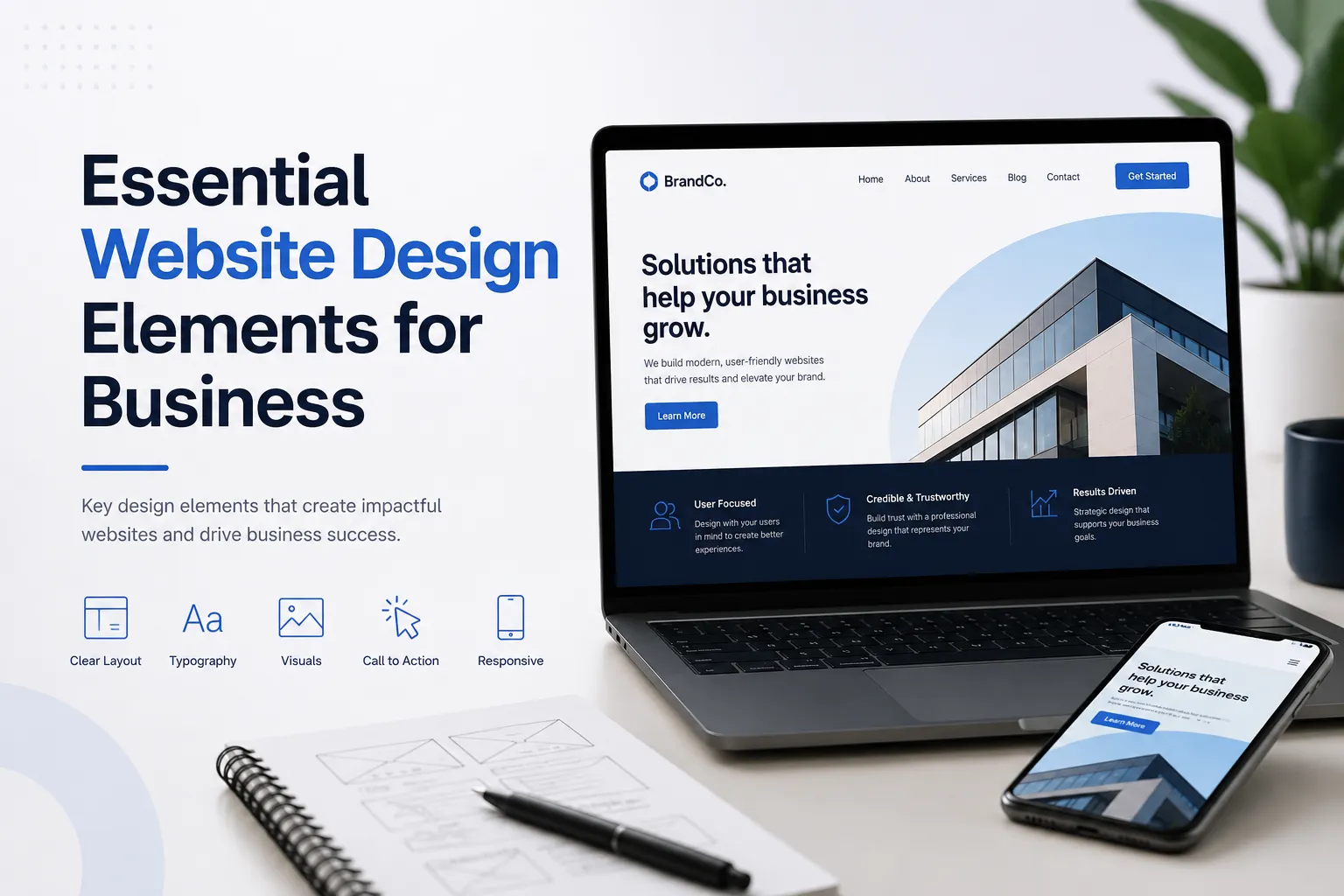
Essential Website Design Elements for Business
Essential Website Design Elements for Business
By 222 Websites Editorial Team · Updated 2026-08-04
Essential website elements include clear navigation, mobile responsiveness, fast load speed, strong calls-to-action, and search-optimized content, according to Forbes Business Council members who identify 19 must-have components. 222 Websites builds these fundamentals into every project, pairing clean design with local SEO tactics so small business sites rank, load quickly, and turn visitors into paying customers.
Key Takeaways
Clear purpose and target audience drive website success; most sites fail by launching without strategic planning first.
Essential design elements include brand identity, navigation, calls-to-action, and mobile responsiveness for business conversion.
222 Websites in Charleston, WV demonstrates that small teams of 5 employees build effective business sites.
Professional web design requires understanding site objectives before selecting templates or writing service descriptions.

What are the essential website design elements?
Website design is the discipline of creating digital platforms that represent a company's brand, communicate its value proposition, and guide specific audiences toward specific actions. A properly designed business website establishes credibility, speaks directly to target customers, and showcases products and services in the best possible light. Without these foundations, a site becomes decoration rather than a business tool.
How does website design affect business credibility?
Most company websites are built backwards. Teams pick a template, write paragraphs about services, and launch — then wonder six months later why no one converts. This backward approach damages credibility because visitors sense the missing strategy immediately. A site built without purpose signals that the business behind it operates the same way.
Which web design elements drive conversions?
Several core web design elements determine whether a visitor stays or leaves:
Clear value proposition — The site must communicate within seconds what the company does and why it matters
Purposeful navigation — Every menu and link should guide visitors toward a specific action, whether requesting a quote or booking a call
Fast loading performance — Speed directly impacts both user experience and search rankings
Mobile responsiveness — The layout must function flawlessly on phones, tablets, and desktops
222 Websites builds sleek, high-performing web design and marketing systems that convert visitors into leads. Each design starts with strategy, not templates — ensuring every element serves the business's actual goals from day one.

Which web design elements drive conversions?
Conversion-focused web design relies on specific web design elements that build trust and guide visitors toward action. An 'About Us' page stands as a pivotal element that companies often overlook. It carries significant potential to build trust and engagement. Small business websites should be easy to navigate and provide clear value for target customers. Without these foundations, even visually striking sites fail to convert.
Why does an 'About Us' page matter for conversions?
An 'About Us' page humanizes a brand. Companies quickly move away from including this page as they grow, assuming visitors already know the story. That assumption costs conversions. A well-crafted page shares the company's mission, team background, and values. Creating the emotional connection that turns a casual browser into a paying customer.
How does navigation affect conversion rates?
Navigation determines whether visitors find what they need or leave frustrated. Clean, modern design paired with fast load times and mobile responsiveness ensures a professional brand experience across all devices. The delivery model for effective sites blends strategy, design, and implementation into one cohesive workflow. Discovery clarifies goals and messaging first, then design translates that strategy into brand-aligned layouts. This structured approach eliminates confusion and keeps visitors moving toward conversion points.
Web Design Element | Conversion Impact |
|---|---|
About Us page | Builds trust and emotional connection |
Easy navigation | Reduces bounce rates, increases time on site |
Mobile responsiveness | Captures a notable share+ of traffic on smartphones |
Fast load speed | Prevents abandonment under 3 seconds |
How do you build a website that works?
Building a website that works requires starting with strategy, not templates. Good website design begins with a clear understanding of what the site is supposed to do, who it's for, and how every decision serves those answers. Most company websites are built backwards. Teams pick a template, write a few paragraphs about services, and launch without a plan. That approach leaves businesses wondering six months later why no one is finding them or converting.
What makes a website functional instead of just decorative?
A functional website prioritizes conversion over aesthetics. The essential web design elements include clear calls to action, fast loading speeds, mobile responsiveness, and intuitive navigation. 222 Websites streamlines processes to deliver fully functional websites in as little as one week, depending on scope. The company offers ongoing maintenance with unlimited edits to keep sites current after launch.
Which industries benefit most from custom website builds?
Every industry gains from a tailored approach, but some see faster returns. 222 Websites serves small businesses across a wide selection of industries, including:
Retail — product showcases and e-commerce integration
Healthcare — patient education and appointment scheduling
Real estate — property listings and virtual tours
Hospitality — booking systems and location information
Each solution is built around a client's market. Objectives, ensuring the site serves real business goals rather than just looking polished in a screenshot.
The right design elements work together to build trust, guide visitors toward action, and reflect your brand's professionalism. A thoughtfully designed website isn't a luxury—it's the foundation of how customers discover and engage with your business online. When strategy, aesthetics, and functionality align, your site becomes a genuine asset that drives growth rather than simply occupying digital space.
FAQ
What is the most overlooked website design element?
The 'About Us' page. Companies often remove it as they grow, assuming visitors already know their story, but it builds trust by sharing mission, team background, and values.
Why do most business websites fail to convert visitors?
They get built backwards. Teams pick a template and write service descriptions before defining strategy, then launch without a clear purpose or target audience in mind.
What role does mobile responsiveness play in website design?
Mobile responsiveness ensures the layout functions flawlessly on phones, tablets, and desktops, directly impacting user experience and helping visitors take action regardless of device.

Ready to rank on page one? You need SEO services drive qualified organic traffic to your business.
Need a high-converting website? Explore our professional website design services built to scale your business.
Both services are designed to build your foundation to get found and grow.
Unleash Your Business Brilliance.
Your Online Success Starts Here
© 2026 222 Websites - All Rights Reserved